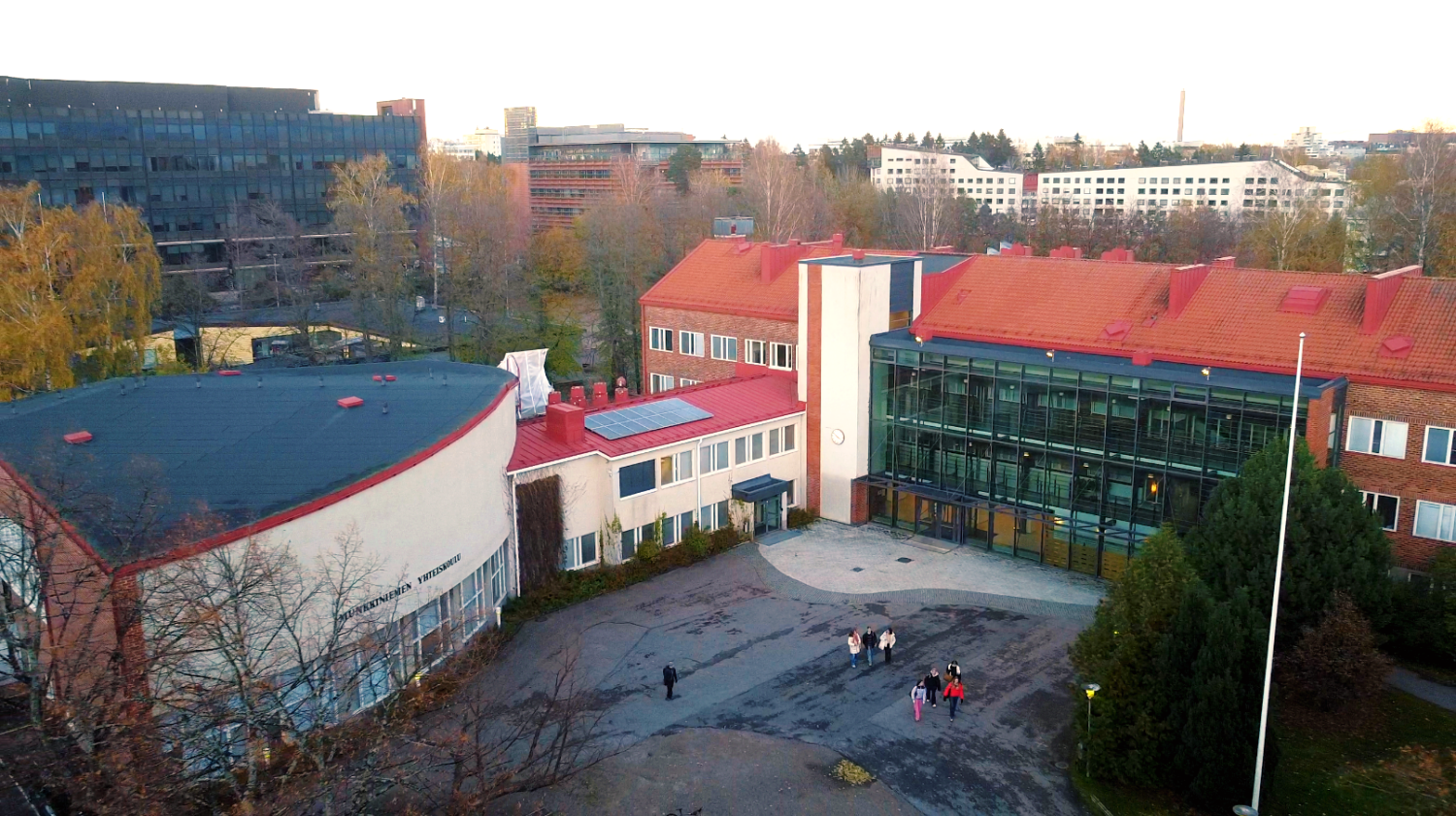
Helsinki, Munkkiniemi
Renovation and Extension, School Building
Existing Building: 10,388 m²
Extension: 1,033.5 m²
Architect: Jaakkola Arkkitehdit
Responsible Structural Designer: Patrik Laakso
Structural Design Project Manager: Patrik Laakso
Complexity: V+
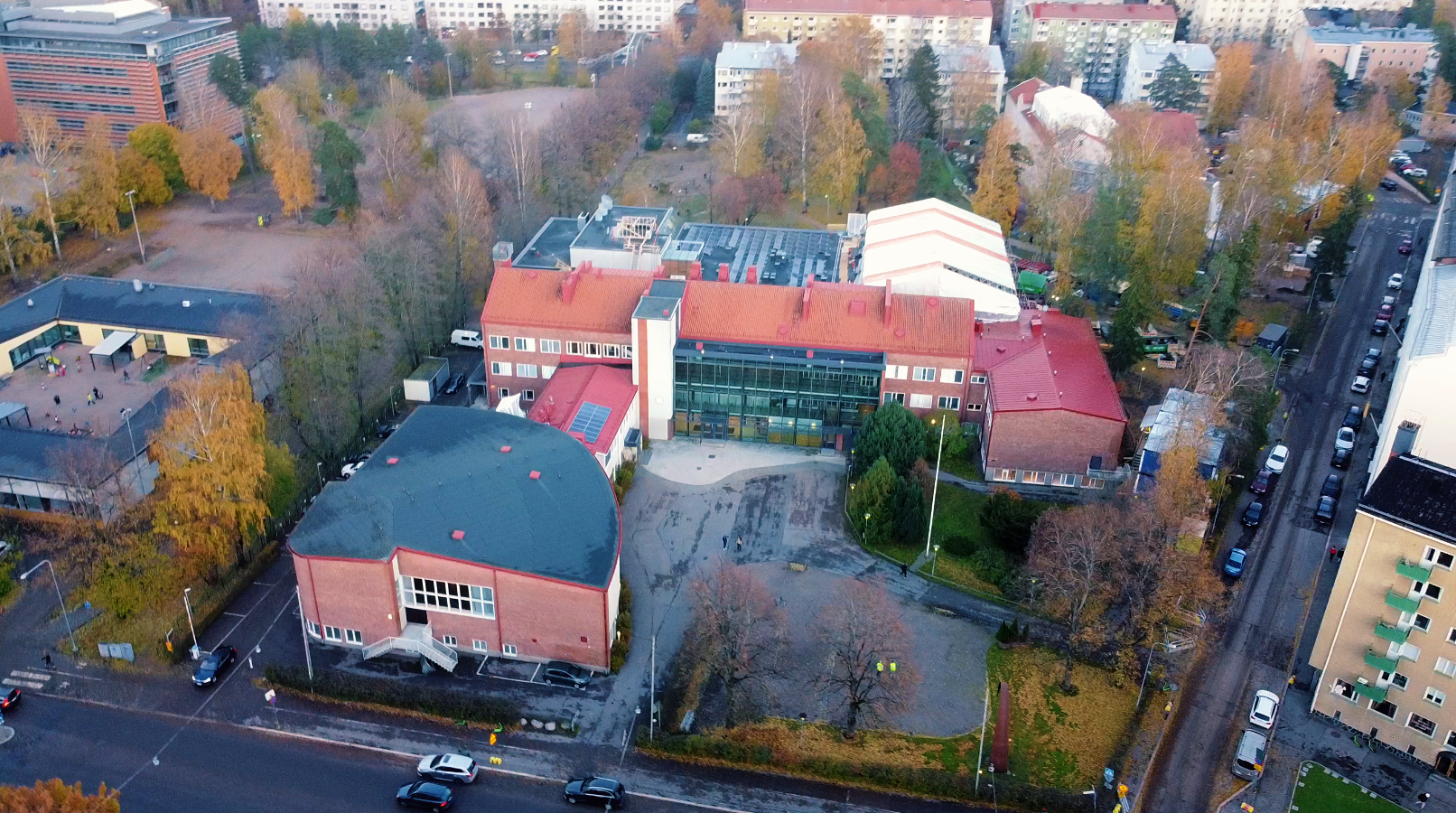
The original Munkkiniemi School building was constructed in two phases during the 1950s and underwent a renovation and extension between 1999 and 2000. Over two decades, the building accrued technical repair needs, particularly in facades and windows. The renovation included updates to kitchen and dining areas, as well as home economics and science classrooms. The additional space provided by the new extension improved support and guidance functions.
Renovation Work
- Alterations to Routes: New door openings with necessary reinforcements.
- Building Services Updates: Replacement and rerouting of systems, including capacity assessments and structural reinforcements for new routes. Collaborated closely with other design disciplines to optimize technical paths.
- Structural Measures for Outdoor Equipment: New pipelines and heat recovery units required structural interventions, such as steel towers and platforms for pipelines, and reinforcements for roof structures.
- Ground-Floor Repairs: Ground-contact floors were repaired or replaced locally, addressing challenging soil and moisture conditions while accommodating new space requirements.
- Facade Repairs: Original concrete window lintels were replaced without dismantling the brick facade. Repairs also included extensive work on windows, protective flashings, and damaged sections of the facade and tile roofs.
Extension Work
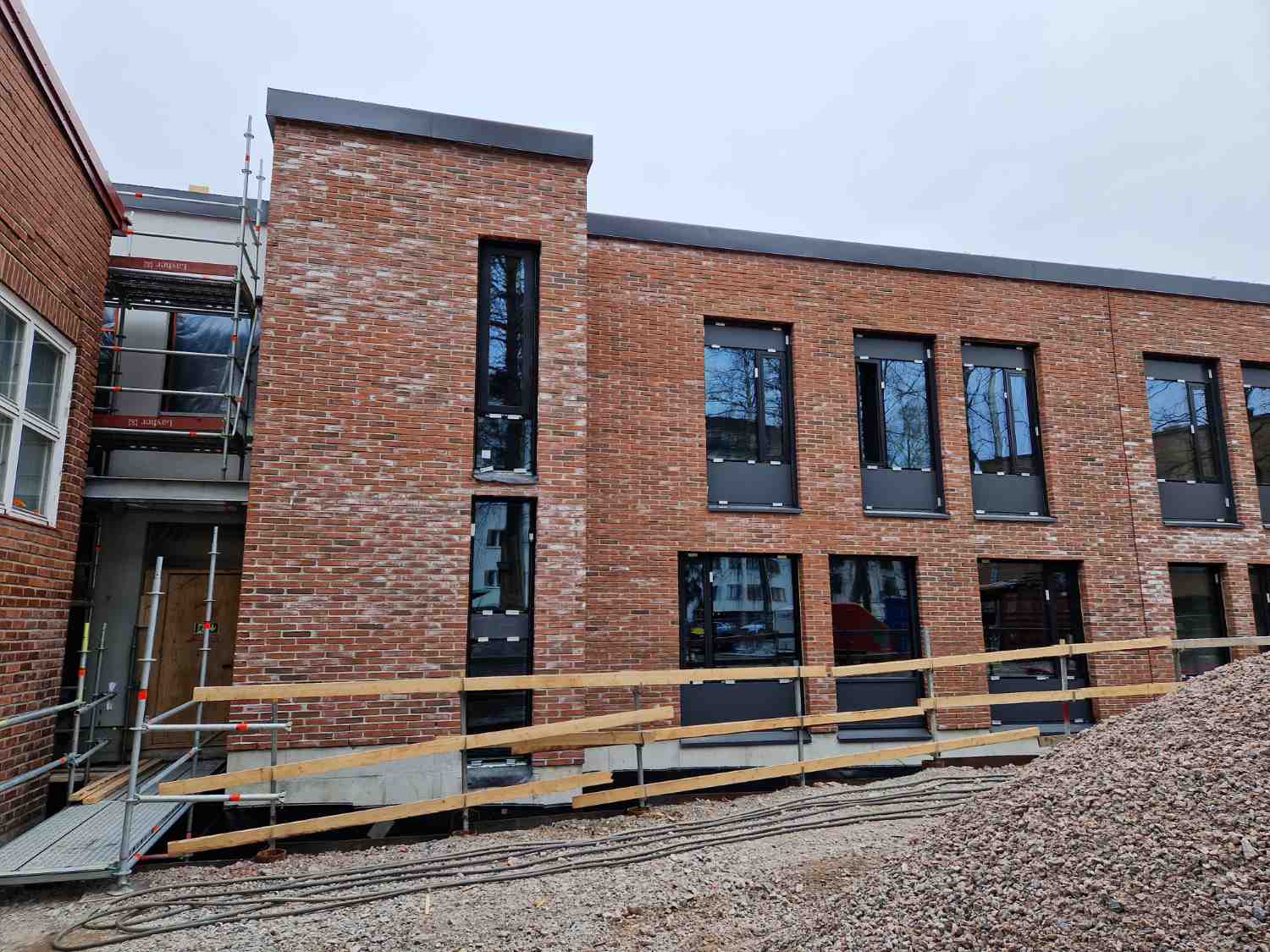
- New Extension: The relatively small extension, located at the junction of the original building and the 2000 addition, was structurally separated from existing structures. However, non-load-bearing elements overlapped at the interface.
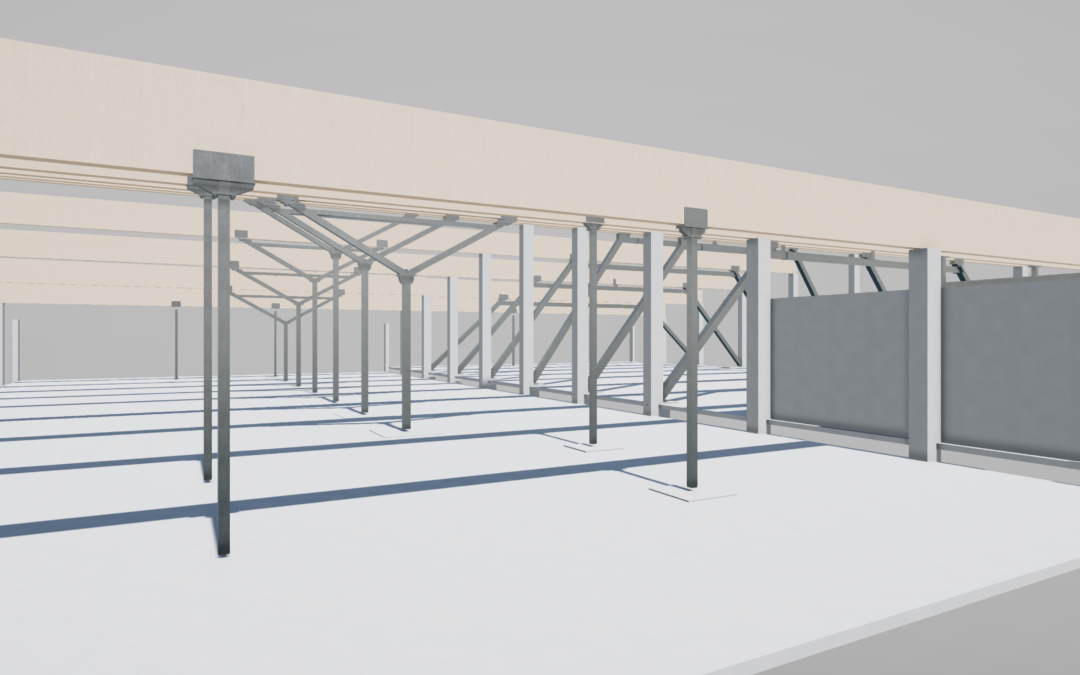
- Structural Design: The extension’s load-bearing frame comprised cast-in-place walls, columns, and slabs, as well as shallow composite beams to facilitate horizontal routing of technical systems in low ceiling heights. The structure also included steel canopies, a spiral emergency staircase, and an external fresh air intake shaft.
- Challenging Foundation Conditions: The site presented low soil-bearing capacity, and excavations near the existing building were limited by its foundations. Varying foundation levels, sloping ground, property boundaries, and protected landscaping necessitated complex shoring, excavations, and multiple foundation levels. Some new foundations were integrated with the existing ones.
This project addressed the dual challenge of renovating a historic building while integrating a structurally and logistically complex extension, ensuring functional and aesthetic harmony.